The Fit Comes First
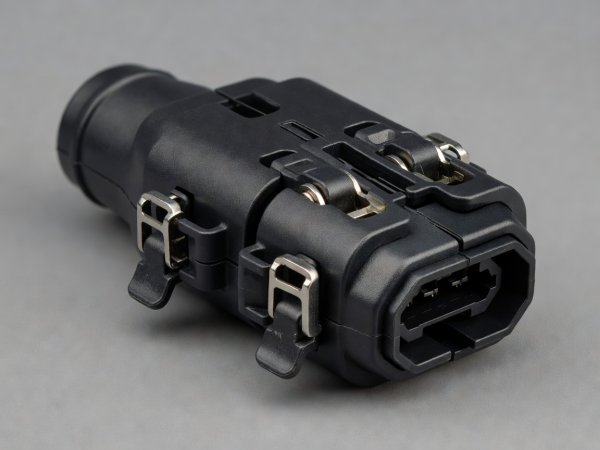
Even the fastest highway dispenser is useless if the physical nozzle cannot mate safely with your vehicle's charge port or if an uncertified adapter triggers a thermal fault. As North American automakers transition from Combined Charging System (CCS1) ports to the SAE J3400 (NACS) standard, road trippers frequently encounter mixed hardware at hotels, parks, and highway plazas.
Learn how each connector carries power and signaling, and verify which exact adapters belong in your vehicle before leaving home.
Review your charging plan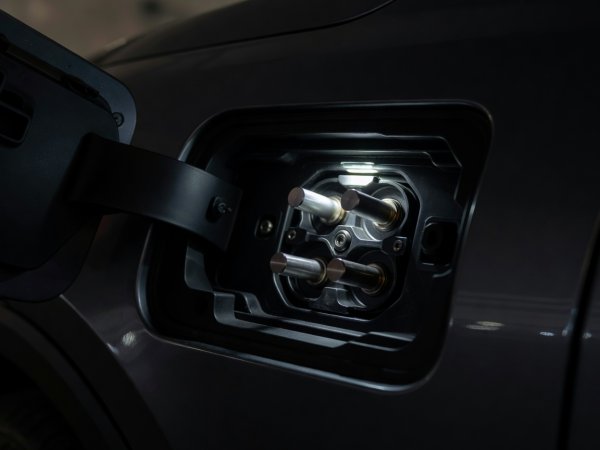
Four Connector Profiles on North American Roads
Inspect the structural pin layouts and electrical capabilities of the four connectors you will encounter across Level 2 destination chargers and Level 3 DC fast corridors.
SAE J3400 (NACS)
Use: AC Level 1/2 & DC Fast
Max Rating: Up to 1,000V DC / 500A+ (liquid cooled)
Communication: PLC (Power Line Communication) per DIN 70121 / ISO 15118. Uses internal vehicle contactors to route either AC to the onboard charger or DC straight to the battery pack.
CCS1 (Combo 1)
Use: DC Fast Charging
Max Rating: 1,000V DC / 500A
Communication: PLC over Control Pilot (CP) pin. Dedicates two large lower pins exclusively to direct current while leaving the upper AC power pins unenergized during DC sessions.
SAE J1772 (Type 1)
Use: AC Level 1 & Level 2 Only
Max Rating: 240V AC / 80A (19.2 kW max)
Communication: PWM analog signaling on Control Pilot. Found at hotels, municipal garages, workplaces, and home wall boxes.
CHAdeMO (Legacy DC)
Use: Legacy DC Fast (Nissan Leaf, Mitsubishi)
Max Rating: Typically 50 kW – 62.5 kW (500V / 125A)
Communication: CAN bus protocol (incompatible with passive NACS/CCS adapters).
Why AC and DC Adapters Cannot Be Swapped
In a J3400 (NACS) connector, the same two top pins carry 240V alternating current at a hotel charger and 400V–800V direct current at a Supercharger. In a CCS1/J1772 vehicle inlet, however, AC and DC sit on completely separate pins. Because of this physical separation, aCCS1-equipped vehicle requires two distinct adapters to use both types of NACS cords:
-
NACS-to-CCS1 DC Fast Adapter (UL 2252 Certified)
Routes the NACS power pins down into the large bottom DC pins of your vehicle's CCS1 port. Only works at enabled V3/V4 Superchargers and NACS DC fast pedestals—never on a Tesla Wall Connector.
-
NACS-to-J1772 Level 2 Adapter
Routes the NACS power pins into the upper AC pins of your vehicle's J1772 port for overnight hotel destination charging. Never attempt to attach this compact adapter to a DC fast charger.
-
Incompatible Legacy Hardware
Older Tesla V1/V2 Superchargers (identifiable by thicker silver-collar cables) use proprietary single-wire CAN signaling rather than PLC and cannot charge CCS1 vehicles even with an official DC adapter.