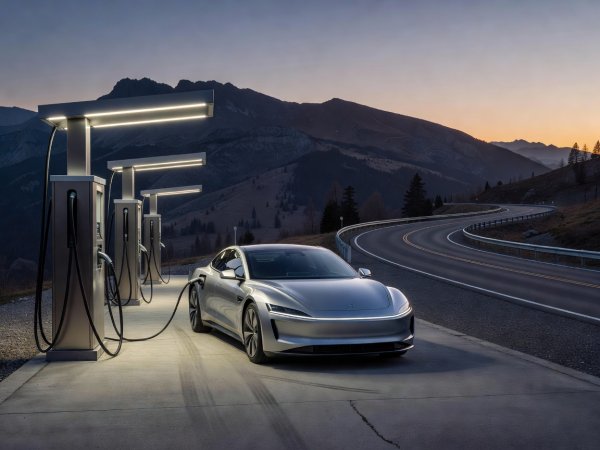
Leave Yourself Another Option
The difference between an effortless 600-mile electric road trip and an anxious detour comes down to one principle: never commit your remaining battery energy to a single point of failure. Construction detours, utility transformer maintenance, or a holiday queue at a four-stall plaza are routine highway events when you already know which exit holds your secondary stop.
Follow this three-layer workflow to verify every leg before you merge onto the interstate.
Review your charging plan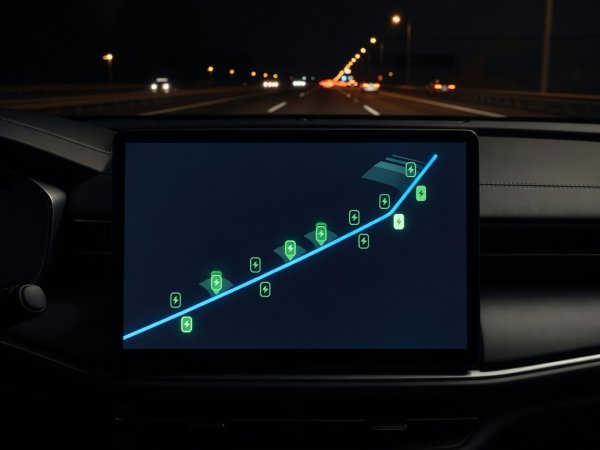
Cross-Checking Physics, Crowd Reports, and Vehicle Telemetry
No single app captures every variable. Combining three complementary tools takes less than ten minutes the evening before departure:
-
Physics & Elevation Modeling (A Better Routeplanner / ABRP)
Select your exact vehicle trim and wheel size, set your realistic reference consumption at 65 mph, input seasonal wind/temperature, and set minimum charger arrival SoC to 15%–20%. Prefer sites with at least 6 to 8 high-power stalls.
-
Recent Human Check-Ins (PlugShare & Operator Apps)
Inspect each proposed stop in PlugShare. Look beyond the aggregate score and read the three most recent driver check-ins: did someone charge at 180 kW yesterday, or are two out of four stalls wrapped in caution tape with 35 kW cable cooling faults?
-
In-Vehicle Native Navigation (Thermal Preconditioning Trigger)
Once your stops are chosen, enter the next charger directly into the car's native navigation system (not only Apple CarPlay or Android Auto, unless integrated) so the vehicle's battery management system heats or cools the pack prior to arrival.
Anatomy of a Resilient 420-Mile Mountain Corridor
Consider a winter afternoon drive climbing 4,500 feet across a two-stage highway corridor with a 77 kWh battery pack:
-
Departure at 95% SoC — Early Decision Gate at Mile 135
Instead of stretching to a lone four-stall station at Mile 190 with 8% arrival, the driver evaluates energy consumption at Mile 135 (12-stall dual-network plaza). If headwinds pushed efficiency down to 2.5 mi/kWh, a 12-minute splash at Mile 135 guarantees a 25% buffer over the summit.
-
Summit Bailout Pair at Mile 275 & Mile 288
The primary stop at Mile 275 sits at a travel center with 8 CCS1/NACS stalls (350 kW). Twelve miles further down the grade at Mile 288 sits an open 12-stall Supercharger site—requiring only 3% additional battery to reach if the travel center is full.
-
Overnight Level 2 Verification
Before booking a hotel advertising "EV Charging," verify whether it has four 48A J1772 wall boxes or a single 6 kW plug shared across a valet lot, and check whether there is a fast charger within 5 miles for morning departure.